
Large trade deficit and rupee decline against the US dollar are putting pressure on the CAD, and these steps are likely to have a positive impact on the external sector.
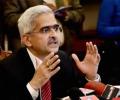
Heightened geopolitical uncertainties will lead the Reserve Bank's rate-setting panel to opt for a status quo at the next week's meeting, Axis Bank's chief economist Saugata Bhattacharya said on Monday. Bhattacharya said he had earlier expected a tightening action at the policy meet scheduled for April 6-8 but the increased uncertainties on the geopolitical front due to the Russian invasion of Ukraine and its impact on commodity prices makes him now think that RBI will defer such an action. He said the central bank's Monetary Policy Committee (MPC) may hike rates in the second half of FY23 by up to 0.50 per cent.

The government has partially deregulated diesel price allowing a hike of 40-50 paise a litre per month for retail customers and nearly Rs 11 for bulk consumers, a step that is feared will have a cascading effect on inflation.
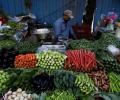
Retail inflation eased to 7.04 per cent in May, mainly on account of softening food and fuel prices as the government as well as the RBI stepped in to control spiralling price rise by way of duty cuts and repo rate hike. However, the inflation print stayed above the Reserve Bank's upper tolerance level of 6 per cent for the fifth month in a row. The Consumer Price Index (CPI) based retail inflation was 7.79 per cent in April.

It is time he stood up and assured the middle class that they can count on him as one of their own, says Dr Sudhir Bisht.

Pilot's statement came amid reports of his discontentment with the Congress leadership.

Finance minister Nirmala Sitharaman on Wednesday exuded confidence that inflation would further decline and the government is on track to meet its budgetary target for deficit and said that there is no fear of stagflation in India. Replying to the debate on first batch of Supplementary Demands for Grants 2022-23 in Lok Sabha, the finance minister said inflation has come down and it is now in the tolerable band of the RBI. Inflation has been declining since April 2022 and it is declining further, she said.
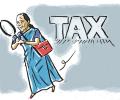
'When you need to revive the economy, when you need to revive aggregate demand, you cut taxes.' 'But what's this government doing?' 'It's increasing taxes for the middle class and the vast majority of the poor on fuel, which has a ratchet effect on most other products.'
The cabinet committee on economic affairs will meet this evening to decide on the prices of petrol, diesel, LPG and kerosene, petroleum minister Mani Shankar Aiyar said.
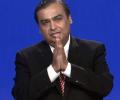
Billionaire Mukesh Ambani's Reliance Industries Ltd on Friday reported a 46 per cent jump in net profit for the three months ended June on the back of bumper earnings from oil and telecom businesses. The oil-to-retail-to-telecom conglomerate's consolidated net profit rose to Rs 17,955 crore during April-June period -- the first quarter of 2022-23 fiscal year -- from Rs 12,273 crore in the year-ago period, it said a stock exchange filing.

In the next quarter, the country will also start gearing up for various Assembly elections could put the government as well as the OMCs under pressure
Petrol will cost Rs 3.73 per litre more from today (Friday), while diesel prices have been increased by Rs 2 a litre. Also, your cooking gas cylinder will now cost Rs 35 more, while kerosene will be priced Rs 3 per litre more.
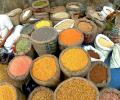
Prices of food items like cereals, pulses, and edible oils rose or remained steady in May, a Reserve Bank of India (RBI) report said, indicating there could be another higher inflation print. However, it observed that the Monetary Policy Committee's (MPC's) surprise move to increase interest rates bodes well for its credibility. The RBI's monthly State of the Economy report, released on Tuesday, citing high frequency food price data from the Ministry of Consumer Affairs for the period May 1-12, said the increase in the prices of cereals was primarily because of the surge in wheat prices.

The government has readied a big legislative agenda for the Monsoon Session of Parliament beginning Monday even as the Opposition is raring to corner the ruling dispensation over a host of issues, including handling of the second wave of COVID-19, rise in fuel prices and farmers' stir.

A large number of items including petrol, diesel, gold, silver, cigarettes, fully-imported cars and split air conditioners will become more expensive due to hike in taxes, as proposed by Finance Minister Nirmala Sitharaman in the Union Budget for 2019-20.

The MPC headed by RBI Governor Urjit Patel said that the recent excise duty cut by the government on petrol and diesel will help contain inflation.

Opposition members in the Lok Sabha on Monday blamed the Bharatiya Janata Party-led central government's policies for the price rise and accused it of ignoring the plight of common people, saying kitchens will soon "see a lockdown" if the Centre does not take corrective measures.
With consensus on raising petrol, diesel and domestic LPG prices still eluding, the Cabinet Committee on Political Affairs will meet early Wednesday morning. If a consensus is hammered at the CCPA meeting, the Cabinet Committee on Economic Affairs may be convened, government sources said.
Goods transporters and petrol dealers association in Maharashtra claimed on Wednesday that they were being denied fuel at petrol pumps which could impact prices of commodities. "Our vehicles across the state are getting only about 70 per cent of the fuel and as a result of which they are being delayed (to reach destinations)," Prakash Gavali, president of the Maharashtra Rajya Truck Tempo Tankers Bus Vahtuk Mahasangh, which represents transporters, said.
Petroleum Minister Ram Naik on Tuesday ruled out any increase in petrol and diesel prices in the run-up to the General Elections saying international crude oil prices have eased.
The Union government on Thursday ruled out any increase in the prices of petrol and diesel despite the surge in global crude prices.

Despite the increase, at Rs 64.32 per litre ATF costs less than petrol and diesel.
Former Petroleum Minister and senior Bharatiya Janata Party leader Ram Naik on Wednesday flayed the Congress-led government for raising the LPG prices, saying the burden on the common man could have been avoided by cutting duties.
Petroleum Minister Mani Shankar Aiyar on Tuesday indicated that the government would increase petrol, diesel and LPG prices, but also cut duties in a bid to contain the impact of surge in international oil prices.\n\n
The Cabinet Committee on Economic Affairs on Wednesday deferred a decision on the package on pricing and distribution of sensitive petroleum products.

'They would not have had to impose GST on wheat, rice, buttermilk etc. if they had not toppled governments. People do not have to face inflation'
While there is no solace for those who own petrol cars, let us look at the cheapest diesel cars available in India to help prospective buyers.

Stocks to watch: Container Corp, Snowman Logistics & Transport Corp
The government's decision to raise fuel prices in June has scuttled the oil companies' plans to reduce their losses from retail fuel sales as consumers are buying less of premium fuels, which is more expensive than normal fuels.
The prices of petrol and diesel have been recently hiked and more can be expected in coming months. A few tips on how to make your litre of petrol go the distance.
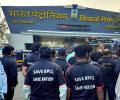
Oil Minister Hardeep Singh Puri on Thursday indicated that the much-delayed privatisation of oil major BPCL may not happen in the near future, saying there is "no proposal whatsoever" on his table for now. As part of its asset monetisation plan, the government had in November 2019 put Bharat Petroleum Corporation (BPCL) on the block and said it would completely sell its 52.98 per cent stake in the country's second largest state-run oil refiner and marketer. Though it had received three tentative bids, it got only one financial bid from Vedanta group, forcing it in May 2022 to shelve the plan pending a "comprehensive review".
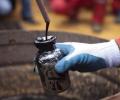
Centre and state governments are steadily increasing excise duties and value-added tax

The government has chosen to profiteer off people's misery and suffering, Gandhi said.

Finance Minister Arun Jaitley on Wednesday said for the first time fiscal deficit target will be met without budgetary cuts.

The government on Thursday more than doubled the price of natural gas that is used to produce electricity, make fertilisers, turned into CNG and piped to household kitchens for cooking, on the back of a spike in global energy prices. The price of gas produced from old regulated fields, such as the nation's largest gas field of Bassein of ONGC, will rise to a record high of $6.10 per million British thermal unit (mmBtu) from the current $2.90 per mmBtu, according to the oil ministry's Petroleum Planning and Analysis Cell (PPAC). The new price, which is likely to result in a hike in CNG and piped cooking gas rates, will be for six months beginning April 1.

Indian Oil Corporation (IOC), the nation's biggest oil firm, on Tuesday reported a 31.4 per cent drop in the fourth quarter net profit as record refining margins were wiped away by a margin squeeze in petrochemicals and losses on auto fuel sales. Standalone net profit of Rs 6,021.88 crore, or Rs 6.56 a share, in January-March, compared with Rs 8,781.30 crore, or Rs 9.56 per share, in the same period a year back, the company said in a stock exchange filing. Sequentially, the profit was higher than Rs 5,860.80 crore in the previous quarter.

Mobile phones and TV sets manufactured in India would become cheaper with Finance Minister Nirmala Sitharaman announcing cuts in Basic Customs Duty (BCD) on import of their components but smokers would have to pay more as the government has increased taxes.
Making a case for increasing prices of petroleum products and deregulating diesel prices, the Reserve Bank on Monday said these steps are necessary to contain fiscal slippages and arrest decline in growth.
Hindustan Motors on Wednesday announced a marginal 0.5 per cent increase in Ambassador prices and 0.3-0.5 per cent on all Trekker variants following the announcement of a two per cent education cess in the Union Budget.
